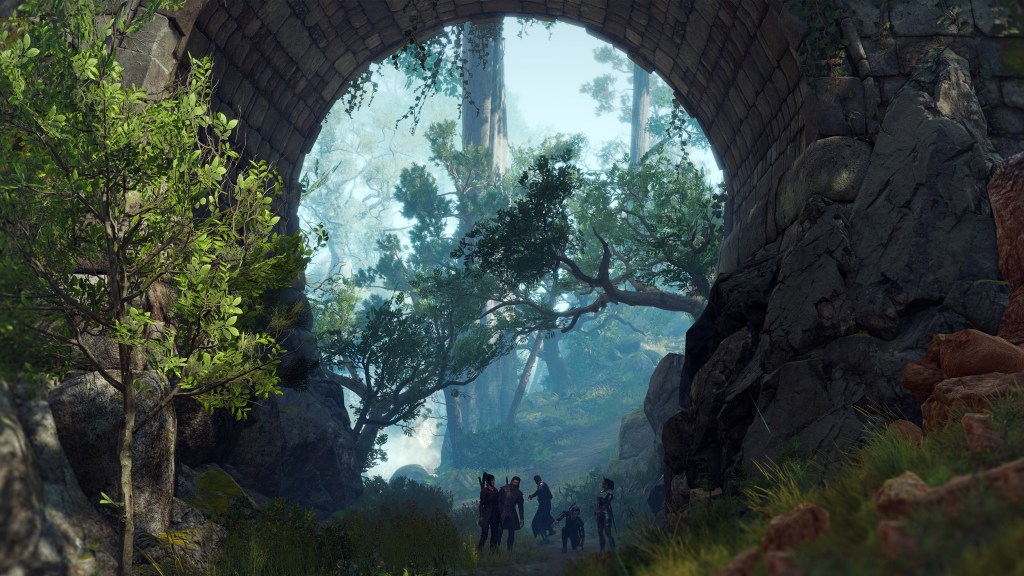
When I was little, my grandmother told me a story about a woman my uncle dated in college who played Dungeons & Dragons. The two reportedly had a deep connection and a happy relationship, until one day when she came out to him as an elf. My uncle, believing her to be joking, cheekily asked whether she had pointy ears. Unfortunately, far from finding the question funny, his girlfriend found it deeply insulting. She proceeded to speak about the grand, real world mission she had embarked upon, as well as the myriad races she was in eternal combat against. My uncle was stunned, and perhaps unsurprisingly, their relationship ended shortly after.
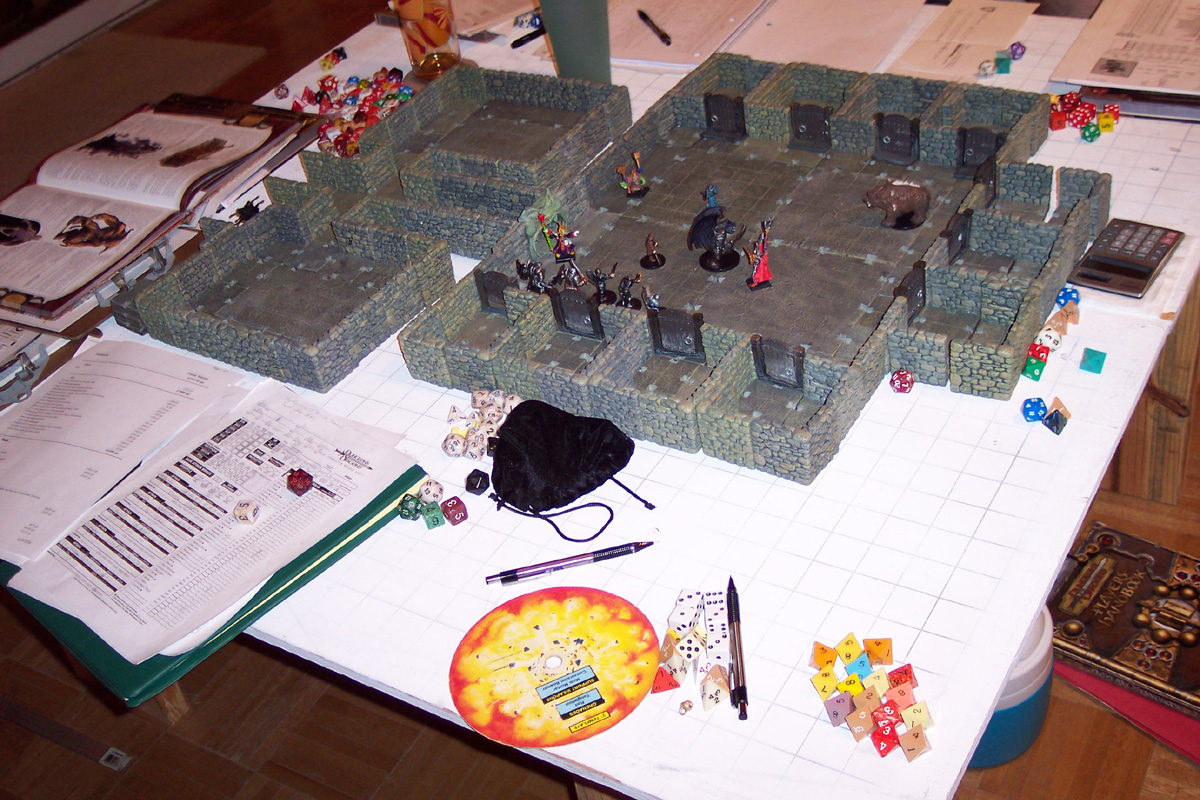
As an evangelical, my grandmother shared this story to emphasize how fantasy was a slippery slope. The Devil, she whispered to me, works in crafty ways — one minute you think you’re playing a game, and the next, you’re convinced that you’re an elf. The only way to protect your sanity and avoid eternal damnation is, therefore, by avoiding anything and everything fantastical.
Although certainly fascinating, I’m happy to share that this cautionary tale had little impact on me. I continued to smuggle Harry Potter books into my grandmother’s sleepy Adirondack home, and I even devoured a copy of Twilight beneath her roof one summer. And while I would’ve loved to receive a letter from Hogwarts or stumble into a chance encounter with a sexy vampire, I didn’t burst into flames for having those thoughts, nor did I seriously believe they would happen. This leads me to believe that my uncle’s girlfriend didn’t sign a pact with Satan, and instead, was likely working through some mental health struggles. But who knows?
Regardless of the truth, I’ve been thinking about this story a lot lately. Not only because many far-right views seem to be increasingly gaining traction, but because I recently spent nearly 100 hours playing as an elf in Baldur’s Gate 3.
Brainworms, Companions, and Elvish Circumcision
Developed by Larian Studios, Baldur’s Gate 3 (BG3) is a direct adaptation of Dungeons & Dragons and uses the tabletop game’s Forgotten Realms mechanics and setting. Chief among these is a twenty-sided die, which determine your success in everything from combat to dialogue. Prior to BG3, I had only played D&D once years ago, so much of this was new to me. But after some trial and error, the systems became second nature, and I quickly became engrossed in the world of Faerûn.

The premise of Baldur’s Gate 3 is quite simple. After a parasitic brainworm infects you and your companions, you embark on a race against the clock to find a cure. Predictably, this ends up being more convoluted than it sounds, and the plot thickens in many meaningful — and sometimes surprising — ways. But while I loved the story and the myriad options players have to navigate it, the companions were — and continue to be — my favorite part of BG3.
I grew up playing RPGs and story-driven FPS titles (that’s role-playing games and first-person shooters, for the uninitiated), and I spent a good chunk of my adolescent years exploring worlds with Kaiden Alenko in Mass Effect, debating morality with Kreia in Star Wars Knights of the Old Republic II, and fighting the Combine with Alyx Vance in the Half-Life series. These fictional beings had a profound impact on me, and while I still think of their stories to this day, Larian has managed to create a character ensemble unlike no other.
From Shadowheart, a cleric who worships the goddess of darkness, to Gale, the eloquent wizard who I ended up romancing, each of the ten recruitable companions has a unique story, as well as perspectives that dictate their feelings towards you. Want to stop to help a group of refugees, even to your own detriment? Gale might appreciate doing so, but Astarion, a manipulative vampire with a complex past, probably won’t. Tired of trying to negotiate your way past a pair of guards? You can always just attack them — an act that Lae’zel, a battle-hardened githyanki warrior, will almost certainly approve of. While the diverse strengths and weaknesses of your companions makes progressing through fights incredibly rewarding, their personalities and stories outside of combat are what really make them shine.
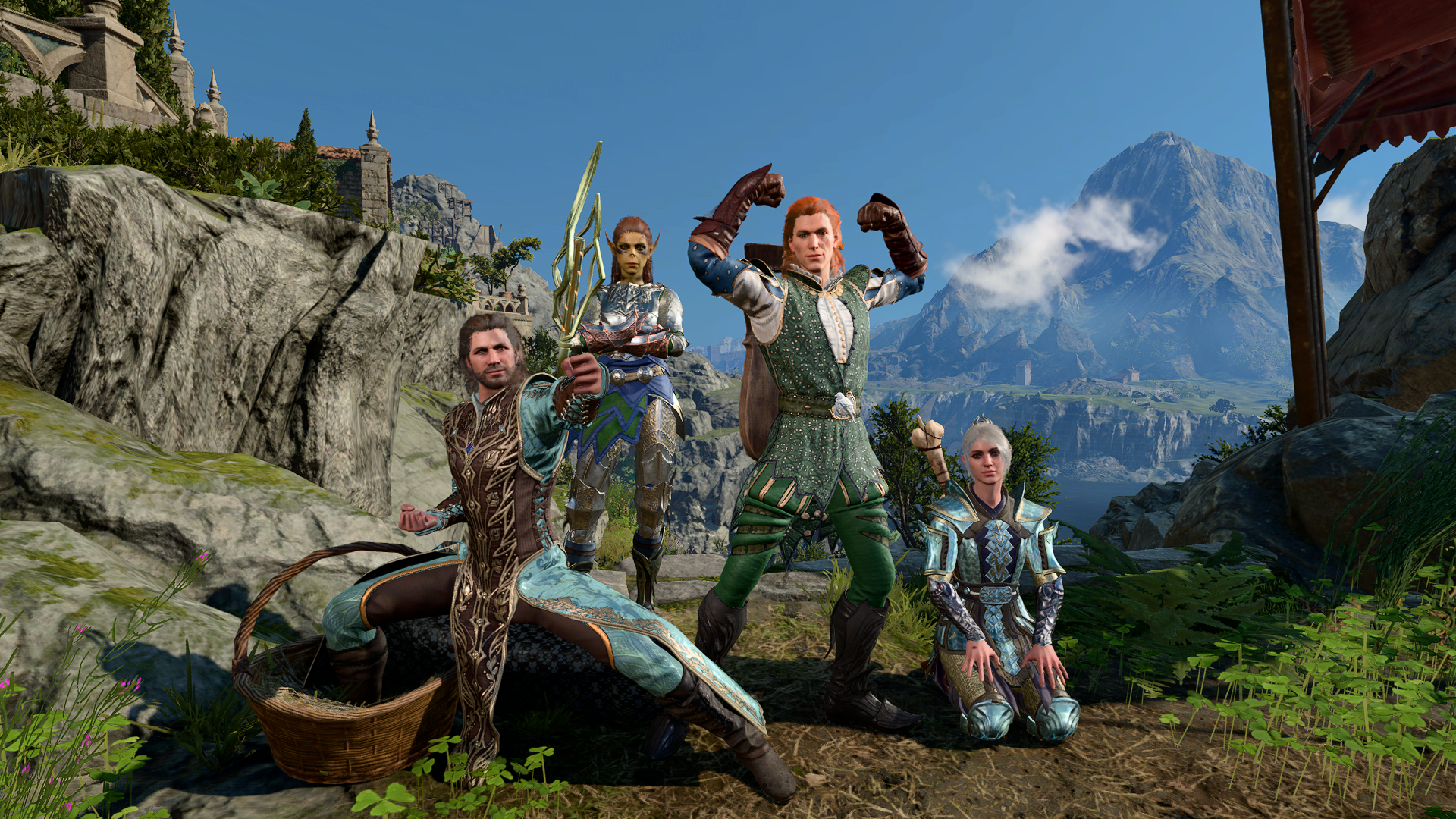
Amazingly, Larian also chose to extend this care to almost every non-companion character you encounter. The studio worked with over 240 voice actors for the game, helping everyone from goblin raiders to the neighborhood hag not just look compelling, but sound so too. While I’m often prone to skipping lengthy dialogue scenes, I found myself actively listening to almost everything in BG3, just to soak it all in.
There are so many other aspects of the game worth gushing about, such as character creation. (Besides selecting a race, class, and origin, you even choose your character’s genitalia. I wonder how my grandmother would feel about me spending an afternoon debating whether elves practice circumcision.) But after recently wrapping up my first playthrough as a pointy-eared elvish bard, I think it’s worth highlighting what makes Baldur’s Gate 3 such an important game in 2026.
Swimming Against the Tide of Enshittification
I’ve written previously about the depressing state of the modern gaming industry. Video games have gone from products to services — from items you buy once to tools designed to extract ongoing investment. This has allowed companies to enshittify entire series, alienating longstanding fanbases and setting worryingly low new standards in the process.
It’s also worth mentioning that video games have, historically, catered to heterosexual men, with the desires of women, LGBTQ+ people, and other minorities being little more than afterthoughts. In recent years, I’d argue that many of the biggest enshittifiers have been able to don masks of Progressivism, whether through adding shallow queer romances into games or slapping Pride colors onto their company logos once a year. Like so much of “corporate responsibility,” this veneer serves a dual function; besides appealing to minority players, it works to hide labor abuses, industry consolidation, and the often bigoted beliefs of company executives.
While no game is perfect, Baldur’s Gate 3 still manages to feel like a breath of fresh air against this backdrop of decay.
Unlike just about every other modern title, BG3 was released as a complete product. There’s not a lick of DLC (downloadable content), paywalled mechanics, or — God forbid — cosmetic additions; buying the game lets you own it in its entirety. Now, no launch is flawless, and bugs and balancing issues were certainly present upon BG3‘s release in Summer 2023. But over the years, the game has seen several massive patches, and most players today appear satisfied with its state.
Far from cheap virtue signaling, Baldur’s Gate 3 is also a masterclass in true inclusivity. All companions are “playersexual,” meaning they’re open to romance regardless of their gender. Outside of diversity, BG3 also explores deep topics like trauma and abuse, with several characters grappling with complex issues from their past. The best part is that, in many ways, all of this is both meaningful yet inconsequential. If you want to romance one — or more — of your companions or help certain characters process past trauma, you can. Alternatively, you can avoid it all and just progress through the main parts of the story. It’s completely up to you.
Larian’s genuine care for Baldur’s Gate 3 is evident, and I believe much of this is due to the company’s independent status. The studio’s head of production, David Walgrave, said it best: “We don’t have shareholders, but we also don’t think about them.”
Translation: When there aren’t vulture hovering over you, rushing deadlines or screeching about the bottom line, you can take the time to craft something truly meaningful.
Charting a Path Forward
While writing this essay, I learned that the Dungeons & Dragons IP is owned by Wizards of the Coast (WOTC), a Hasboro subsidiary. If you’re also skeptical of almost every large corporation these days, it probably won’t surprise you to learn that WOTC has seen multiple rounds of recent layoffs, including nearly 90% of D&D‘s virtual tabletop team. Hasboro’s CEO, Chris Cocks, has also spoken positively about AI, specifically saying how Hasboro — and WOTC, through extension — will use it “significantly and liberally.” As D&D has always been an imaginative, indie space where people can unleash their creativity and bond with other fantasy-lovers, I find this particularly egregious.
Last December, Larian Studios announced their next title: Divinity. While I’m less familiar with the Divinity series, it’s reassuring that Larian fully owns the IP, as it should free them from the constraints they likely faced when producing Baldur’s Gate 3. Hopefully, the studio can continue to offer players thoughtful gaming experiences, even as institutional rot becomes more apparent than ever.
As I conclude my first playthrough and begin planning my second, I can’t help but wonder whether my uncle’s ex has played, or even heard of, the wonder that is Baldur’s Gate 3. I hope that she has, just to live out the elvish fantasy that — clearly — had a large impact on her younger years. Maybe someday, I’ll raise a glass to her, throw it back, and sit down with my grandmother to explain why imagining yourself as an elf — yes, with pointy ears, a queer lover, and a parasite in your brain — can actually be beautiful.

 Chandlersweb.net