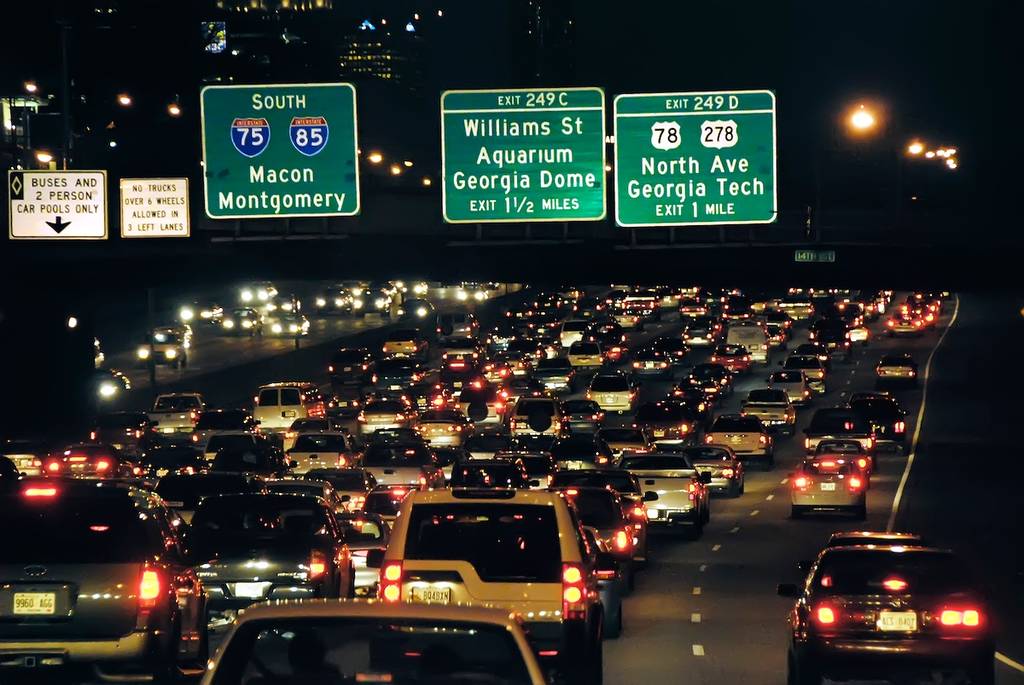
I’ve lived in Atlanta for five years, as of writing this.
Two of those years were spent in Midtown, an affluent neighborhood just north of Atlanta’s downtown. Every city has such a place—luxury apartments with balconies and dog parks dot the horizon; trendy restaurants fill up for happy hour, serving spicy margaritas alongside overpriced appetizers; and Lululemon-clad locals work from home while sipping flat whites and sporting healthy credit scores. An environment that can become grating, after prolonged exposure.
That’s exactly what happened, when our third year in Atlanta became imminent, so my partner and I decided to relocate to a single-family home in Lindridge-Martin Manor (LMM), a suburban neighborhood north of Midtown.
The transition was difficult but rewarding: suddenly, we had a yard, a guest bedroom, and numerous windows from which our cat could stalk wildlife. Our new surroundings were a far cry from the urban density we had grown used to, but it was easy to look past the picket fences and hydrangeas around us, as LMM’s central location kept us close to Midtown, Buckhead, and Buford Highway. And, as a public transportation enthusiast, I comforted myself with the knowledge that the closest MARTA station was only a mile away.
We felt like we had made it.
As the months passed, our love for our new home grew, but we began to notice the limitations of our surroundings. We realized that we had moved from one of Atlanta’s only bastions of urbanism into an environment representative of the metropolitan area as a whole—a neighborhood where the needs of drivers are prioritized at the expense of others. And while we could attempt to ignore this car-centric reality, adamantly walking or biking from place to place, doing so made for an unpleasant experience, at best, and an outright dangerous one, at worst.
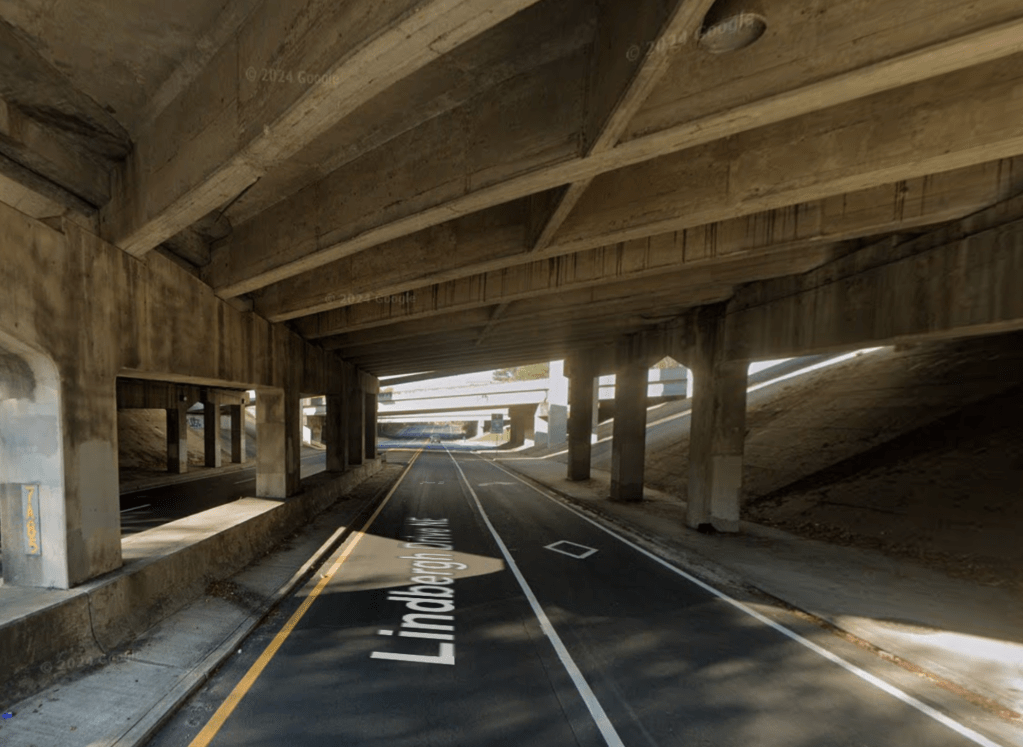
From the Lindbergh Center MARTA station to the string of (surprisingly impressive) Cheshire-Bridge restaurants, I’ve tried walking to many destinations and have realized that doing so, even if somewhere appears close, requires an odyssey. Whether that entails passing under the twelve lanes of the I-85, sprinting across six lanes of rush hour traffic, or simply walking down a narrow sidewalk as oblivious drivers fly by depends on the day. A lack of regard for those outside of vehicles persists, regardless.
This past May 18, these conditions led to tragedy when a driver heading down Lindbergh Dr. NE struck and killed a pedestrian. While the investigation remains ongoing, it appears they drove their vehicle over the curb, where the victim was waiting at a bus stop. The unnamed individual died at the scene, their life taken and their story lost within the noisy, smog-filled chaos that is Atlanta traffic.
“Pedestrian fatally struck by car in NE Atlanta.”
“Pedestrian struck by vehicle in Lindbergh area of Atlanta.”
“Pedestrian traffic fatality.”
News outlets often use detached language when reporting traffic crashes, as if automobile-induced violence were merely an unavoidable aspect of modern life. But as Sarah Goodyear and Doug Gordon highlight in their book Life After Cars, each “fatality” creates a ripple of trauma that can circulate through entire communities.
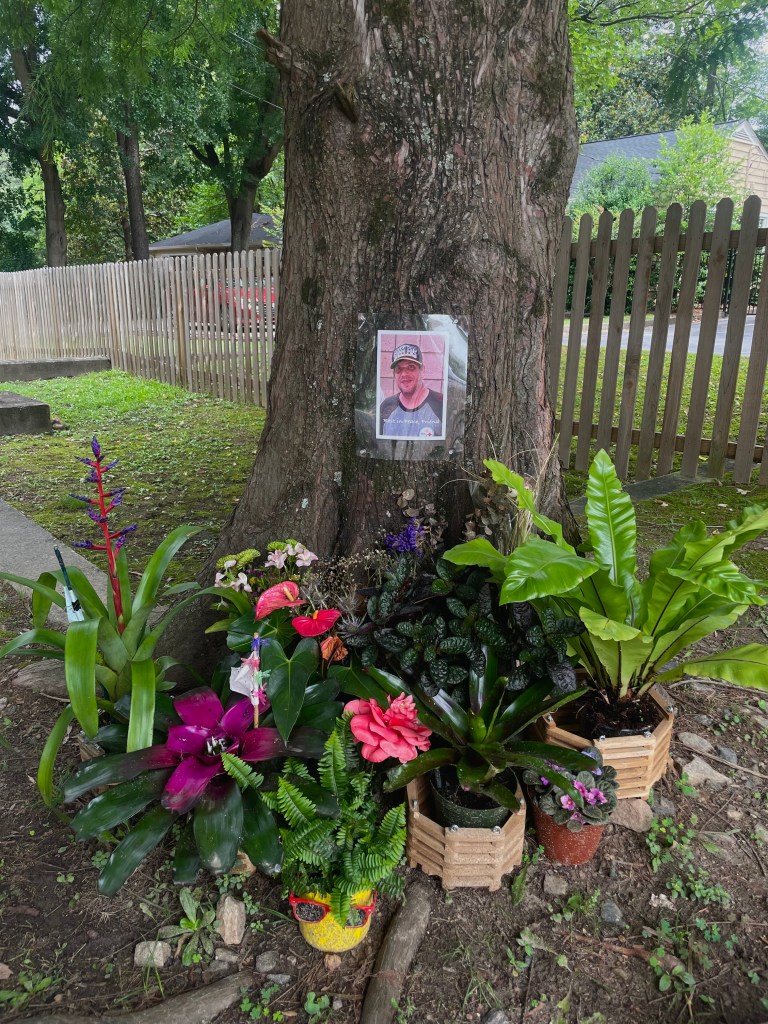
We don’t know who was killed on May 18, but the pop-up vigil that appeared at the site tells us they were loved. They likely had family, friends, and coworkers in their life whose hearts now ache, and who continue to process their grief.
But as tragic as this incident was, it’s far from an isolated incident.
In the early 2020s, when much of the world was mask-clad and social distancing, communities around the United States saw a marked increase in traffic fatalities. Across the five counties that comprise the Atlanta Metro, crashes killed a staggering 520 people in 2021 and 496 people in 2022. In the years since, fatalities have trended downward, but they remain higher than pre-pandemic levels.
While the exact cause of this spike in traffic violence is unclear, many attribute it to fewer vehicles on roads, enabling those that remained to travel at higher speeds. While dangerous for those buckled into motorized steel cages, higher speeds are deadly to pedestrians and bicyclists, who have no seatbelts, airbags, or other protections. Notably, cars don’t need to move at racecar-level speeds to cause tragedy—a vehicle moving at around 30 mph has a 50 percent chance of causing severe injury to a pedestrian and a 25 percent chance of killing them. At higher speeds, the risk of bodily harm increases exponentially.
Over the past few decades, America’s obsession with super-sized cars and trucks has exacerbated these risks. Since 1980, vehicles have bulked by an average of 1,000 pounds, while growing 12 percent longer and 17 percent wider in the past decade. Indeed, although most crashes in Atlanta are vehicle-to-vehicle, pedestrians are overrepresented in fatalities, comprising an average of 35% of all deaths in the past five years. This includes the LMM crash, where the driver was behind the wheel of a Ford F-150—a truck that exemplifies the trend of gargantuanism.

It’s difficult to say what could have made a difference on May 18, as the exact circumstances that led to the crash remain unclear. But a better protected bus stop, a wider sidewalk, and a pedestrian crossing sign to remind drivers that people live and walk here couldn’t have hurt. None of these upgrades are expensive or unrealistic—on the contrary, Atlanta’s Vision Zero Action Plan cites them all as “Recommended Systemic Safety Counter Measures.” This comprehensive roadmap seeks to not only reduce, but eliminate fatal and severe crashes by 2040.
Unfortunately, while ambitious, local advocacy groups have expressed concern over the city’s progress towards its Vision Zero commitments. One such group is Propel ATL.
Founded in 1991 as the Atlanta Bicycle Coalition, the ABC merged with Pedestrians Educating Drivers on Safety (PEDS) in 2021, rebranding as Propel ATL in 2022. Today, the organization aims to grow Atlanta’s streets into “safe, inclusive, and thriving spaces for people to walk, ride, and roll.”
Following the crash, I reached out to Propel ATL to discuss it within the context of larger, city-wide trends. They agreed to meet, but before speaking, made me aware of another crash that had recently occurred in Atlanta’s West End. Again, near a bus stop.
Terence Cobbs, known by those close to him as “Yohan,” had occupied a bench near the corner of Ralph David Abernathy Boulevard SW and Joseph E. Lowery Boulevard SW for years. Well-known by many in the community, he was 40 years old on May 12, when a driver struck him while he was on the sidewalk. He died at Grady Memorial Hospital shortly after.
Two pedestrians killed, both near bus stops. What did this mean?
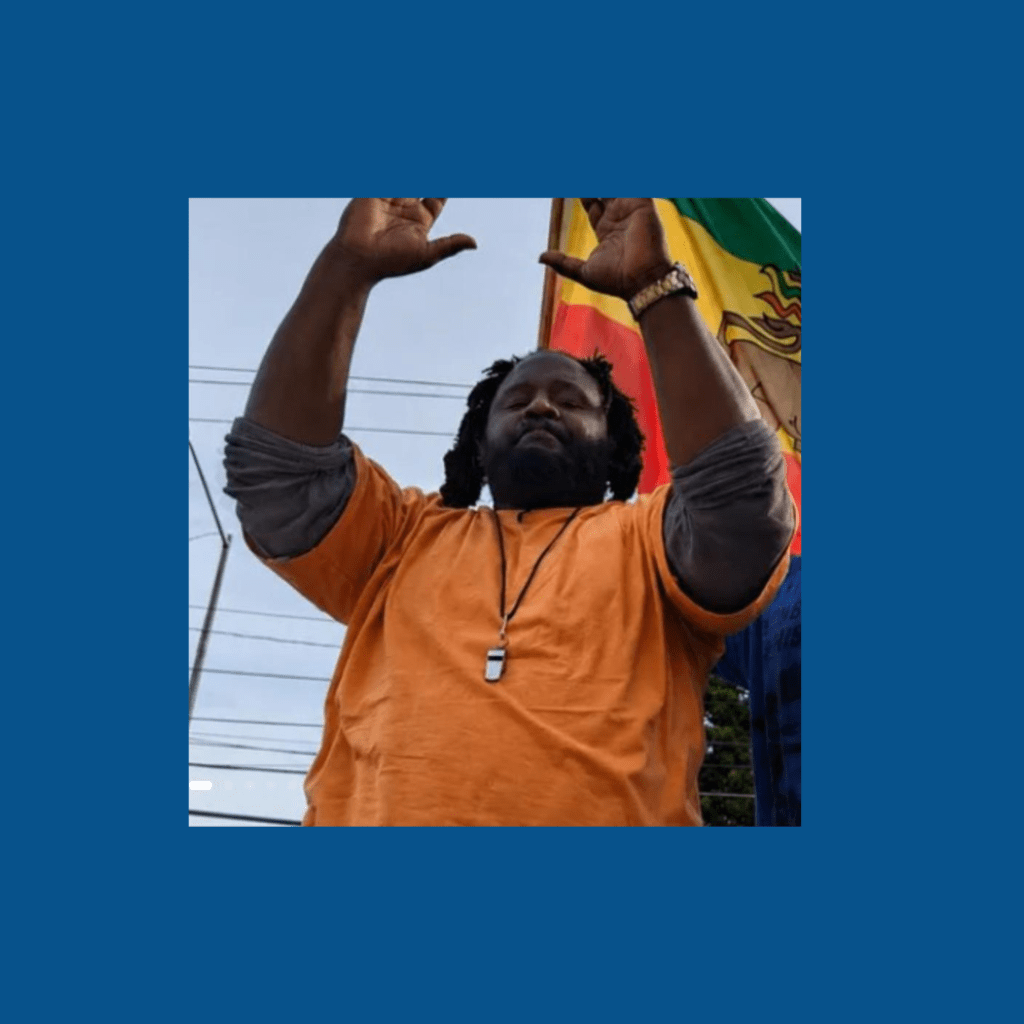
On June 8, I met with Propel ATL’s Executive Director Rebecca Serna. With a background in Urban Policy and Fulbright experience studying participatory planning practices and innovative public transportation projects in Colombia, Rebecca and her team are experts at tracking Atlanta’s progress towards building safer streets. When progress is slow or non-existent, that means holding elected officials accountable and advocating for more.
“Drivers need to feel uncertain,” Rebecca said, when I asked her about deterrents to reckless driving. “When they do, they tend to slow down. Narrower lanes, trees along roadways, safe crossing signs… all are visual cues that remind them to drive slower and look for pedestrians.”
On the stretch of Lindbergh Dr. NE where the pedestrian was killed, no form of traffic calming infrastructure is present, and one side of the street doesn’t even have a sidewalk. This contrasts with the western portion of the two-mile-long street, which has sidewalks, pedestrian crossing signs, and chicanes (artificial obstacles that force drivers to slow down).
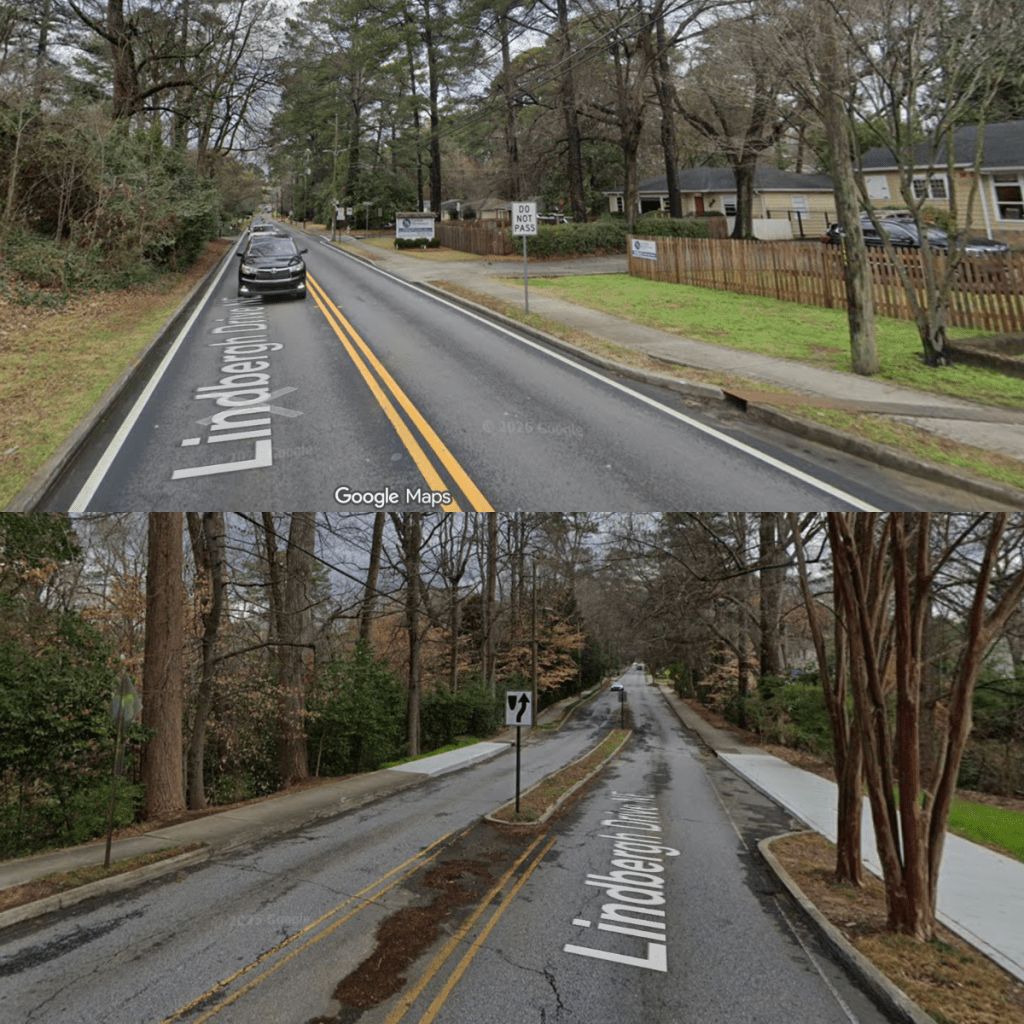
Creating friction for drivers is always a good idea, but this is especially true near bus stops. As the deaths of the LMM victim and Terence Cobbs highlight, many pedestrian deaths occur within walking distance of bus stops—59 percent, according to Propel ATL’s own research. To that end, potholes—despite being the bane of drivers everywhere—can sometimes be useful.
“Potholes are a natural traffic calming solution, and too often, they’re the only form of traffic calming we have,” Rebecca said.
Our goal, of course, shouldn’t be to let streets deteriorate into pothole-ridden messes, but to use their inevitable repavings as opportunities to advocate for better infrastructure, especially because so many people reach out to city officials to complain about them.
As our discussion shifted to city-wide trends, I asked Rebecca whether she felt Atlanta was on track to meet its 2040 goal of zero traffic fatalities.
“No, I do not,” she said without hesitation. “Vision Zero is a great plan—a lot of people have put a lot of work into it. And yet the city’s current draft budget intends to cut Department of Transportation funding.”
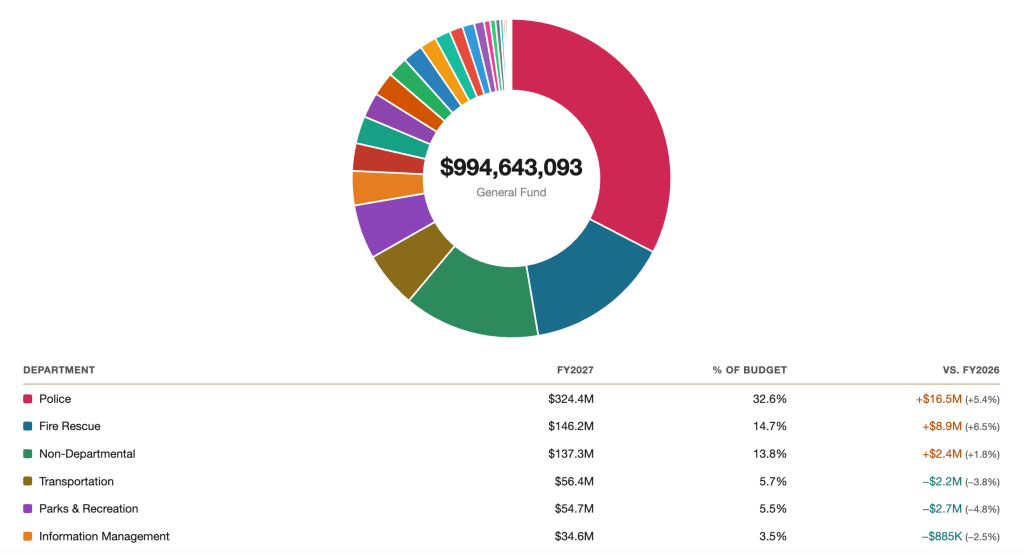
Since we met, the city formally approved its fiscal year 2027 budget. The Department of Transportation lost $2.2 million in funding, a reduction of nearly 4 percent, while Parks & Recreation, City Planning, and other departments saw similar cuts. Funding for police, however, grew by $16.5 million—at $324 million, it now comprises nearly 33 percent of the city’s total budget. This, despite the fact that traffic crashes killed more people than homicides in 2024.
But this reactive approach to public safety isn’t new in Atlanta. Nor, as the past few years have shown, is it popular.
In 2021, officials announced plans to build the Atlanta Public Safety Training Center on an 85-acre site south of the city. From its conception, the project—infamously nicknamed “Cop City”—drew criticism: only 48 percent of Atlantans supported the facility, while 52 percent were unsure or against it. As resistance efforts grew and culminated in occupied protests, George State Patrol Troopers shot and killed activist Manuel Esteban Paez Terán (Tortuguita) and arrested dozens of others. Following these events, over 100,000 Atlantans called for a referendum, but City Council members dismissed these demands as legally moot. The facility opened in April 2025.
This controversy stands in stark contrast to safer streets and public transit expansion—both of which Atlantans have expressed clear support for.
In 2016, 71% of voters supported funding MARTA expansion through a sales tax, and in 2022, another overwhelming majority voted to fund safer streets through Moving Atlanta Forward. But unlike Cop City or a ballooning police budget, progress towards these endeavors is hard to find: MARTA expansion has been slow or non-existent, and many of the city’s Moving Atlanta Forward projects have stalled. This quagmire has eroded the public’s confidence in elected officials’ ability to deliver, leading many Atlantans to believe that meaningful public transportation expansion will never happen.
While hardly a place for measured discourse, Reddit posts nevertheless epitomize these feelings of disappointment. “More MARTA was established in 2016. Ten years and zero projects,” comments one user, in response to a recent MARTA story shared on r/Atlanta. “I genuinely think we need to start arresting people at MARTA and at the city of Atlanta over how taxpayer funds are mismanaged,” suggests another, while receiving 246 upvotes.

I asked Rebecca where she believes this disconnect in public sentiment and elected official response stems from.
“Such a big question,” she laughed. “Something that concerns me with MARTA, specifically, is the revolving door between consulting agencies and their top leadership. If you look at what MARTA spends on planning versus what’s actually being built, there’s a huge disconnect. Both MARTA and the City of Atlanta, as a whole, struggle with project delivery.”
But she also emphasized how 2019, the year the city formed its own Department of Transportation, offered a breath of fresh air.
“Previously, getting things done was even more difficult, as the city’s answer to everything was: we’ll use consultants. That was a really bad answer, and we pointed it out, which is part of what led [the city] to getting a Department of Transportation.”
The key, now, is to hold elected officials accountable to their commitments, particularly as several high-profile incidents risk turning people against MARTA.
I asked Rebecca what that pressure could look like.
“We started a campaign called Where’s My Project?, and it tracks the progress towards the projects taxpayers voted for through Moving Atlanta Forward. I would encourage people to get involved in that campaign, as it’s grassroots and helps bring people together to organize,” Rebecca said.
If that feels daunting, there’s an even simpler thing to do.
“Just send an email to your city council member saying how important safer streets are to you,” Rebecca said. “You don’t have to be an expert, you just have to know the outcome you want. Elected officials—particularly the mayor—don’t often hear from people with these concerns.”
To that end, I reached out to Councilmember Alex Wan, who represents Lindridge-Martin Manor, and the Atlanta Department of Transportation for comment—both as a journalist and a concerned citizen. Neither party responded to my inquiries; presumably, they were lost within a sea of pothole complaints and other similar grievances.
More noise is needed.
***
I recently left my house and saw a new addition to the nearby 35 mph speed limit sign: a Dynamic Speed Monitoring Display (as it’s officially known) that uses radar to tell drivers how fast they’re moving. While I’m skeptical of this tool’s ability to calm traffic, I see it as a step in the right direction. More importantly, I’m hopeful that it’s just one of many planned upgrades to the street.
We can’t bring back the Lindridge-Martin Manor victim, Terence Cobbs, or any of the other pedestrians, cyclists, or drivers killed while navigating Atlanta’s streets. But we can honor their legacy by amplifying their stories and pressuring elected officials into delivering on their commitments.
Traffic violence is not a given, nor should it be normalized—other countries, and even other American cities, have shown that it’s possible to reduce car dependency, build safer streets, and meaningfully expand public transportation.
It’s time for Atlanta to do the same.


Leave a Reply