
When I was nine years old, I traveled with my dad to visit an aunt and uncle who live on the Island of Hawaii1. For most people, the words “Hawaiian vacation” connote images of luxurious, White Lotus-like accommodations. But far from staying in an opulent beachfront complex, we pitched a tent in the backyard of their cozy Hilo home.
Located on the windward side of the island, Hilo is one of the wettest cities in the United States. Suffice to say, while lucky travelers can catch moments of sunshine, it’s generally not the place to visit if you’re hoping for a sunny beach vacation. What Hilo does offer, however, is serenity. Every night of my trip, I would fall asleep to the soft pitter-patter of rain bouncing off our tent’s roof, while geckos chirped their nighttime chorus.

Throughout the two weeks I was in Hawaii, I snorkeled through volcanic tide pools, saw sea turtles basking on black sand beaches, and explored some of the most rugged natural beauty imaginable. I also saw whales. Lots of them.
Where the Giants Swim
The warm Hawaiian waters house a cornucopia of marine life, but in winter and spring, they’re home to a special seasonal visitor: humpback whales. These gentle giants embark on annual voyages from their Arctic feeding grounds to the warm, tropical waters of Hawaii to give birth. Fittingly, these journeys have given whales important roles in native Hawaiian culture. Hawaiians call humpbacks and other large whales koholā and have honored them as ʻaumākua – spiritual guardians who can assume the shape of animals, plants, and various natural phenomena.
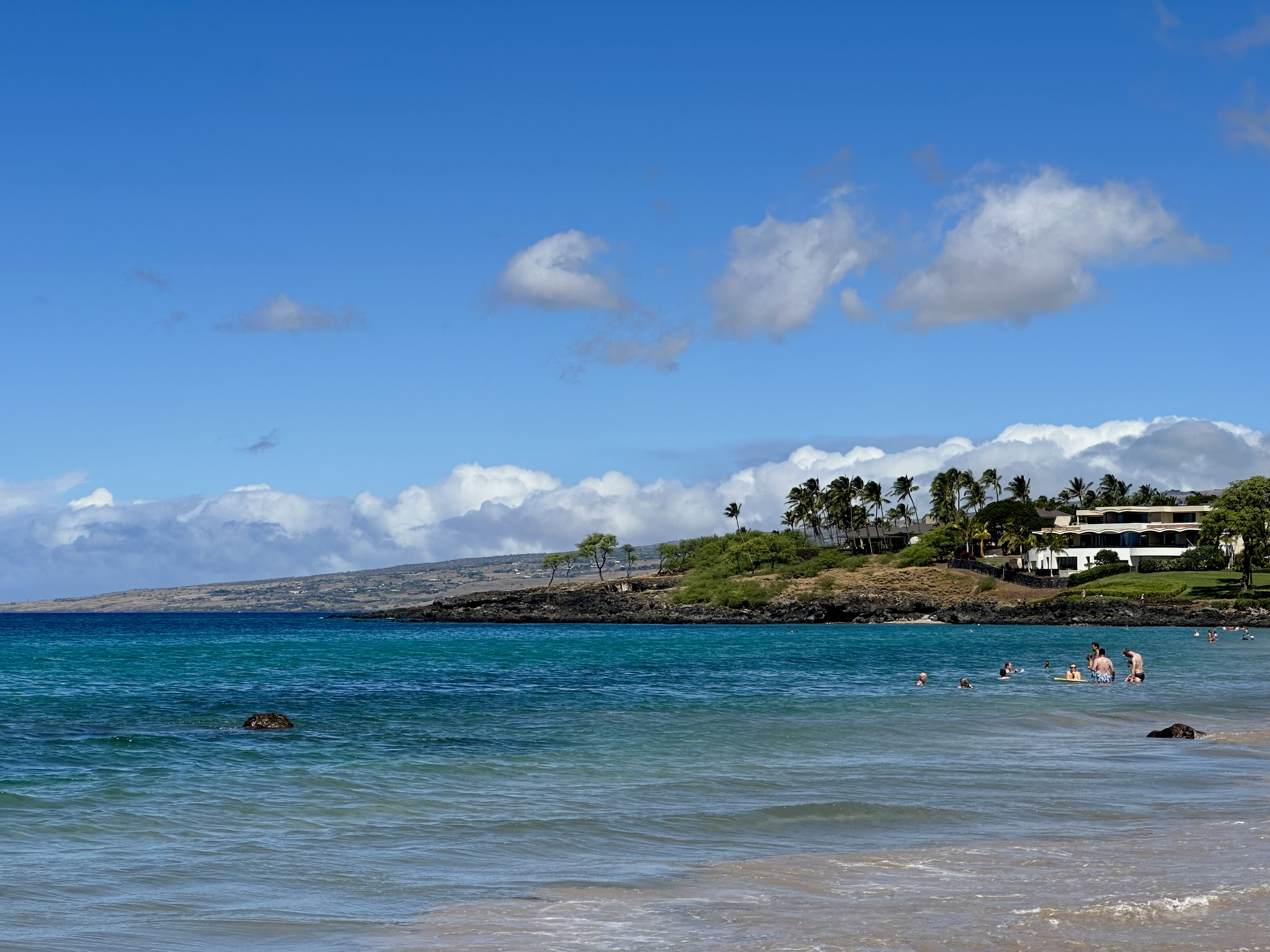
By the time I was nine, I’d already been a whale fanatic for years and hoped to work as a marine biologist when I was older. To my utter joy, I lost count of how many humpbacks I saw within a few days of my trip. I remember driving along the coast and seeing them out in the sparkling blue expanse. At beaches, I would spot their tail flukes and flippers saluting me from a distance. And I even saw several whales breach – propelling their massive, 40-ton bodies out of the water and into the air.
At the time of my trip, I also had a fascination with the animals of the African savannah, particularly with elephants. But my trip to Hawaii was the first time I came face-to-face with one of Earth’s great leviathans, a being I’d previously only read about. To call it a transformative experience would be an understatement: it opened my eyes to the wonders and diversity of life at a young age. I, a skinny 60-pound kid, saw 50-foot whales in their natural habitat. Today, the trip stands out as one of the first times I recognized the preciousness of life – all life.
Into the Mist
Over the following 20 years, I lived a whale-less life, until last summer when I visited the Pacific Northwest to see two friends. Alyssa, a fellow writer and creative who I met in China, has lived in Oregon with her partner Keegan for the past several years, but neither of them had explored much of the state’s stunning coastline. So together, we embarked on a road trip along the coast, regularly stopping to soak up the picture-perfect views. Our main destination, however, was Depoe Bay.
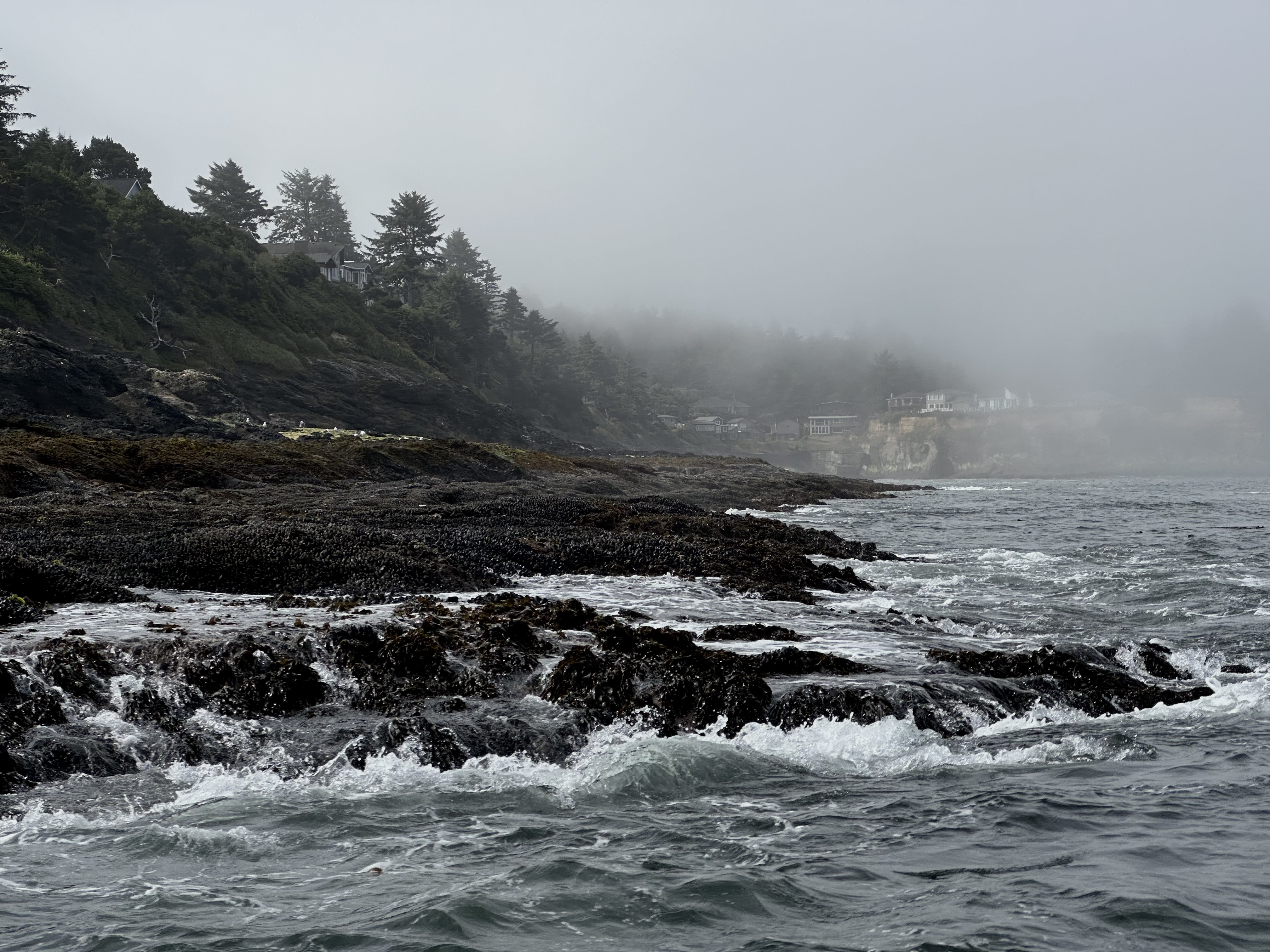
A sleepy town often covered in mist, Depoe Bay looks like something out of Stephenie Meyer’s Twilight novels. But besides housing a collection of quaint shops and restaurants, the town is also home to a renowned museum and whale watching center, Whale Research EcoExcursions. Run by retired marine biologist Carrie Newell, the company specializes in introducing people to the migratory gray whales that pass by Oregon each summer. Throughout her career, Newell discovered key insights about the whales, including the fact that they come to Depoe Bay, specifically, to graze on local shrimp populations. Today, her company offers people the chance to see the gentle filter feeders up close – an opportunity we couldn’t resist signing up for weeks in advance.
On the morning of our tour, we listened to an orientation on gray whales before boarding a tiny inflatable boat and cruising out of the bay. Visibility is, of course, key when it comes to whale watching, so it was initially disheartening to begin the trip under a dense fog cover. While visual cues aren’t always as obvious as a breach, signs like hovering birds or distant spouts of water can also indicate a nearby whale. But we couldn’t see a thing. Fortunately, around halfway through the trip, another vessel reported spotting a whale, so we quickly rode over to try to find it. For the next half hour, we drifted through the dense fog bank, ears perked for distant splashes or spouts. We floated in silence, the ocean holding its breath along with us.
Eventually, our patience paid off. A juvenile gray whale named Creamsicle greeted us, emerging from the depths just feet away from our boat. The first appearance was quick, but we watched, entranced, as they surfaced again and again. While they never breached, their size, movement, and presence made the encounter not just memorable, but sacred. Eventually, they disappeared back into the gray expanse, and we made our way back to shore through the salty air. The fog began to lift.

Following the Oregon trip, I had the chance to participate in another whale watching tour, this time in Seattle. While the vessel we travelled on was much larger than the inflatable we’d boarded in Depoe Bay, we still saw orcas, porpoises, and yes – a humpback, as we cruised around the Puget Sound. After the tour, I felt a quiet joy, as though I’d come full circle. I’d gone from being a nine-year-old kid who felt lucky to have seen humpbacks in Hawaii to an adult who had made whale watching into an annual pilgrimage.
Whale Watching, Responsibly
I’m still learning about the ecological impact of whale watching, but it’s clear that the noise pollution generated by boats can interfere with the ability of whales and other cetaceans to hunt and communicate. While many modern vessels claim to dampen the noise they generate, not everyone buys it, with some accusing whale watching companies of greenwashing. It seems the most responsible observation, then, is done from shore – ideally with a good pair of binoculars. At a minimum, if you join a whale watching tour, try to partner with a company mindful of its environmental impact, or with one that features tours led by a marine biologist, like Whale Research EcoExcursions.
Nevertheless, I’d argue that the benefit of seeing these creatures offers intrinsic value, particularly as human action harms them. This past year, I was heartbroken to read that at least 80 migratory gray whales starved to death off the coast of Baja, California, on account of disruptions to their Arctic feeding grounds. The same researchers also observed fewer calves being born, as well as a much higher frequency of emaciated adults. I firmly believe that if more people had the opportunity to observe animals in their natural habitats, understood the essential ecological role every species plays, and recognized how climate change harms them, collective movements would unite to end this madness. (As always, it’s worth pointing out that stopping the destruction of the biosphere is already technologically feasible – what’s lacking is political power.)
Although the nine-year-old whale fanatic in me hates reading about gray whale starvation, the realist in me understands that doing so is essential. You can’t stop something you don’t care about, nor can you end something you don’t understand. In the years ahead, we’ll all need to channel both our inner child and our realist adult to foster meaningful change.
A Candle in the Dark
When I’m feeling nihilistic, it helps to remind myself of the wonders we share the planet with. Humpback whales that sing ethereal songs in the cerulean depths. Orca pods that have distinct cultures. Gray whales, like Creamsicle, that embark on 10,000-mile migrations across the sea. It’s hard not to be blown away seeing these animals in the wild, because even from a distance, their intelligence shines like a beacon. I believe the world would be a gentler place if more people went whale watching, but beauty is everywhere – and not limited to marine mammals – if you know how to look.
Earlier this year, my partner and I decided to spruce up our garden. While we couldn’t bring the tropical coral reefs of Hawaii to Atlanta, we did add zinnias, sunflowers, and several other plants to our small backyard. We now share the space with pollinators. Lots of them.
Fluttering hummingbirds now zip from bloom to bloom, fuzzy bumblebees somersault through bushes, and majestic butterflies spend entire afternoons probing for nectar. The world might often feel overwhelming, but I can still stand at my window and observe an entire playground of nature. So these days, I put my ear to the ground, listening for where I can make the most meaningful impact, while appreciating the other forms of life that are my neighbors. And, of course, by taking advantage of every opportunity that lets me see more whales.
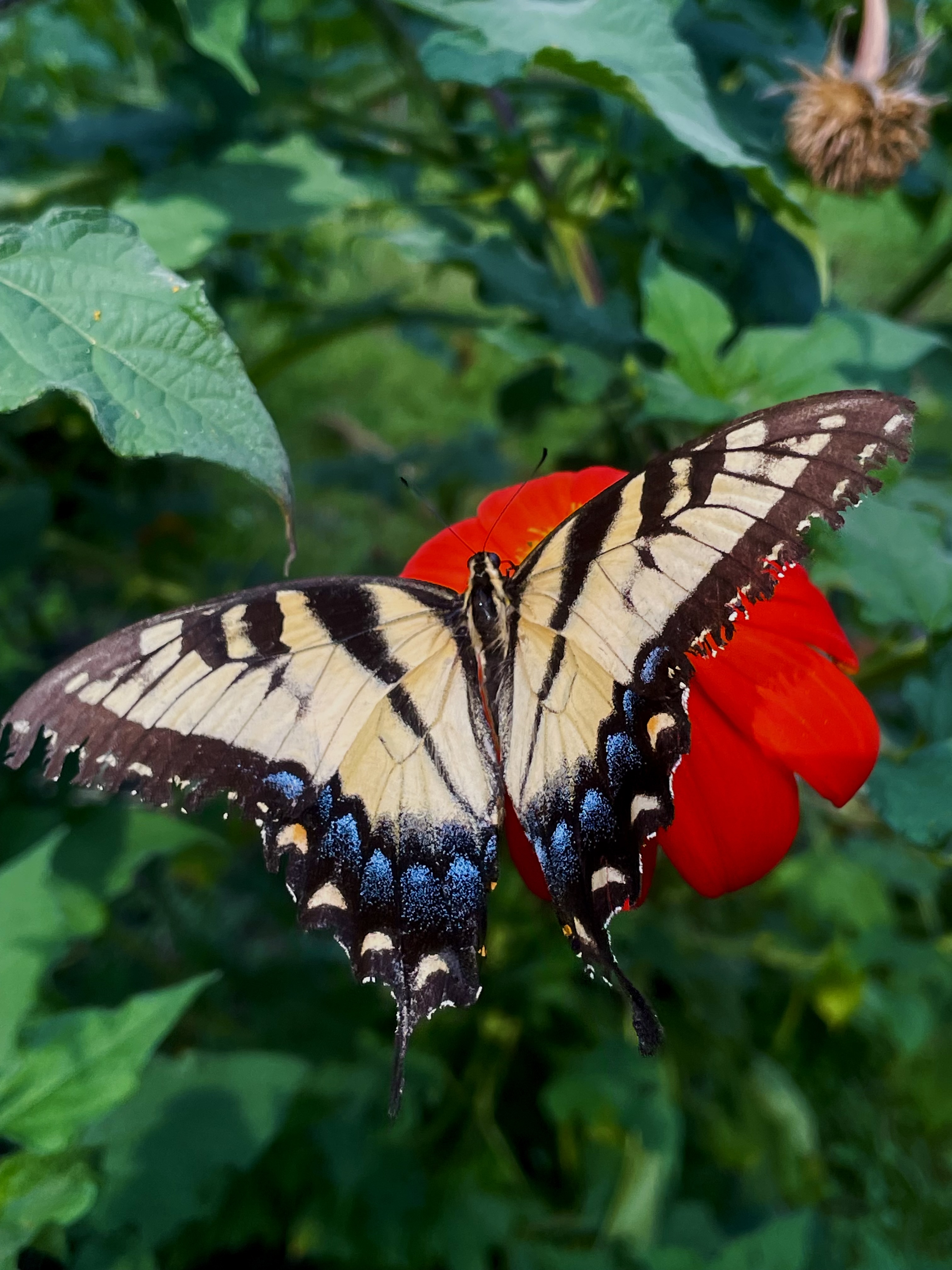
If you’re also feeling overwhelmed at this moment, look for whales. Plant flowers. And understand that this world is still worth fighting for.
While I have many role models, I find myself increasingly turning to the wisdom of Carl Sagan. From showcasing the wonders of the universe in Cosmos to providing us with eerily prescient warnings in The Demon-Haunted World: Science as a Candle in the Dark, his words will always be both comforting and enlightening.
He says it best in Pale Blue Dot:
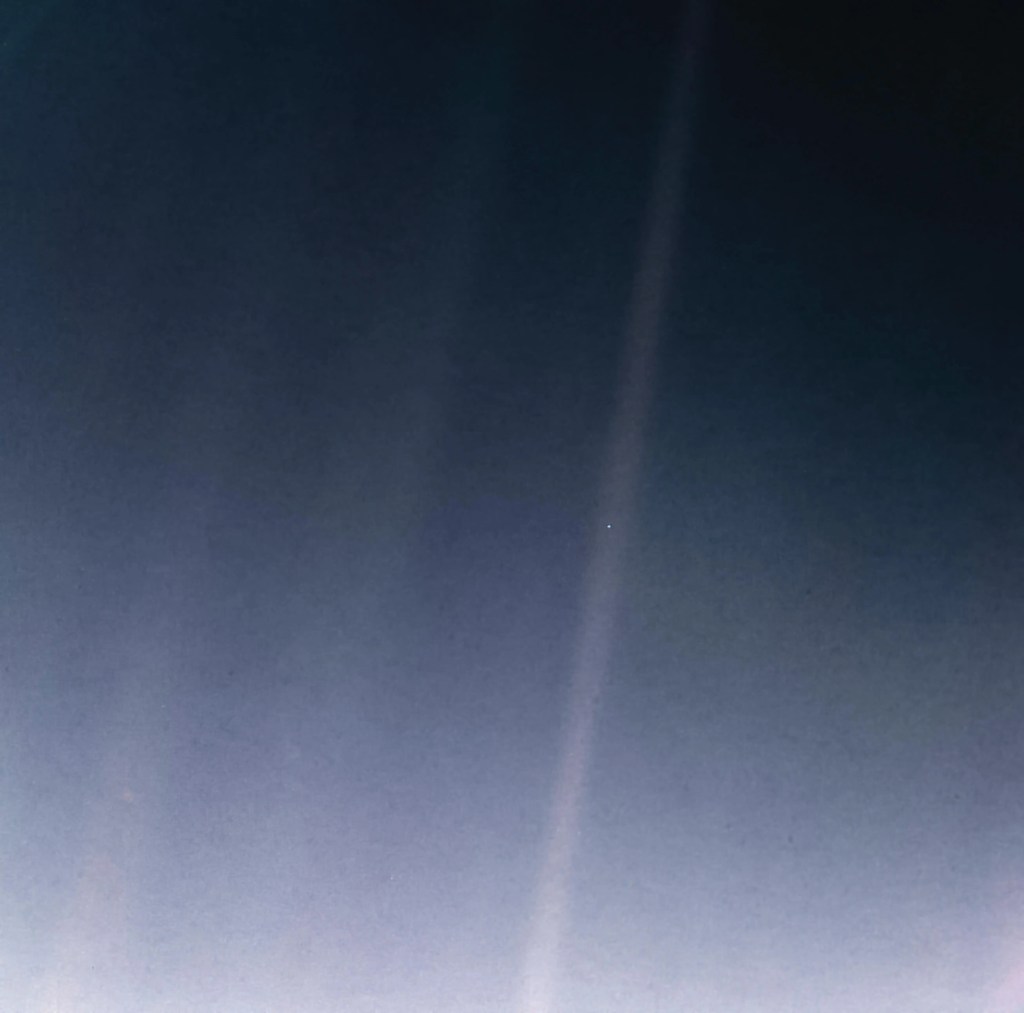
Look again at that dot. That’s here. That’s home. That’s us.
On it everyone you love, everyone you know, everyone you ever heard of, every human being who ever was, lived out their lives.
The Earth is a very small stage in a vast cosmic arena. Think of the rivers of blood spilled by all those generals and emperors so that, in glory and triumph, they could become the momentary masters of a fraction of a dot. Think of the endless cruelties visited by the inhabitants of one corner of this pixel on the scarcely distinguishable inhabitants of some other corner, how frequent their misunderstandings, how fervent their hatreds.
Our posturings, our imagined self-importance, the delusion that we have some privileged position in the Universe, are challenged by this point of pale light. Our planet is a lonely speck in the great enveloping cosmic dark. In our obscurity, in all this vastness, there is no hint that help will come from elsewhere to save us from ourselves.
The Earth is the only world known so far to harbor life. There is nowhere else, at least in the near future, to which our species could migrate. Like it or not, for the moment the Earth is where we make our stand.
It has been said that astronomy is a humbling and character-building experience. There is perhaps no better demonstration of the folly of human conceits than this distant image of our tiny world. To me, it underscores our responsibility to deal more kindly with one another, and to preserve and cherish the pale blue dot, the only home we’ve ever known.
1: In this essay, anglicized spellings such as “Hawaii” are used due to font limitations. In proper Hawaiian, these words include the ʻokina (ʻ) and kahakō (macron), which reflect the language’s pronunciation and meaning more accurately — e.g., “Hawai‘i” and “ʻaumākua.”

 Chandlersweb.net
Leave a reply to Lynn Cancel reply